What Is OCD?
Obsessive-compulsive disorder is a cycle of unwanted, intrusive thoughts or urges (obsessions) followed by mental or physical actions aimed at relieving the distress they cause (compulsions). It isn't a personality trait about liking things clean or orderly.
Common forms include contamination fears, harm or taboo intrusive thoughts, symmetry and checking, and relationship or health-related obsessions. The first-line treatment is exposure and response prevention (ERP), a specific form of CBT built to break that cycle.
ERP is a distinct skill within CBT. Not every CBT-trained therapist has it, so every profile below states the therapist's training directly instead of leaving it to guess.
What to Know About OCD Therapy in Vancouver
Online and in-person
Exposure and response prevention has real telehealth research behind it. Video-delivered ERP has produced outcomes comparable to in-person treatment in published studies with both adults and youth.
Many exposures involve a person's own home or daily routine, so online sessions can mean practicing in the actual setting the compulsions happen in. Any therapist registered in BC can treat you online, including therapists based elsewhere in Canada who are insured to provide online care to BC clients.
Credentials in British Columbia
Vancouver listings show a mix of Registered Clinical Counsellors (RCC), Registered Social Workers (RSW), Canadian Certified Counsellors (CCC), and registered psychologists. Psychology is a regulated college profession in BC.
Counselling and psychotherapy are not yet regulated provincially, and the province has said onboarding is expected to begin around late 2027. RCC today is a voluntary designation from BCACC, a professional association rather than a government college. Every First Session therapist is credential-verified before being listed.
Cost and insurance
Individual sessions in Vancouver commonly run $140 to $250 or more, generally higher for registered psychologists than for master's-level counsellors. Extended health plans usually name which designations they cover, so check your plan's wording before booking.
A receipt is required either way to submit a claim, whether it's reimbursed after the fact or billed to a plan directly.
How to Choose an OCD Therapist in Vancouver
1Ask about ERP specifically
CBT training alone doesn't guarantee ERP experience. Ask whether the therapist has specific training in exposure and response prevention, for example through the IOCDF's Behavior Therapy Training Institute, rather than asking generally about their approach.
2Match the designation to your plan
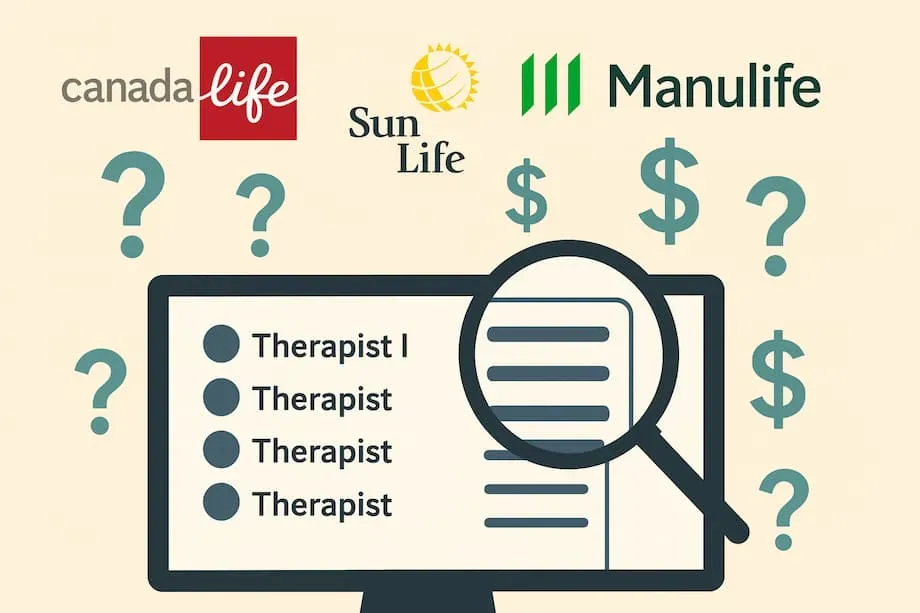
Confirm your extended health plan names the designation before booking, RCC, RSW, CCC, or psychologist. Every First Session profile states the exact designation, so you can check it against your plan's wording first.
3Watch the intro video
A bio lists training. It doesn't show you how someone actually talks about OCD, whether they normalize it or make it feel clinical and distant. Every profile has a short intro video for that reason.
4Use the free consultation to ask about caseload
Book the free 15-minute consultation and ask directly what share of the therapist's caseload involves OCD, and whether ERP is their primary approach for it.
Online widens the pool to therapists insured to work in BC from anywhere in Canada. In-person keeps sessions local. Extended health plans reimburse both formats on the same terms.