Emotional Abuse: Red Flags, Impact & How to Get Help
Emotional abuse is one of the most misunderstood forms of abuse. Unlike physical violence, it doesn't leave visible bruises or broken bones, but that doesn't make it any less harmful. Over time, emotional abuse can fundamentally change how a person thinks, feels, and sees themselves. It can erode confidence, increase anxiety, and leave lasting wounds that continue long after a relationship ends. Many people experiencing emotional abuse don't immediately recognize what's happening. They may wonder whether they're "overreacting," or blame themselves for their partner's behaviour. We wrote this post to break down what is considered emotional abuse, how it impacts someone's mental health, and how to get help.
What is emotional abuse?
Emotional abuse is a pattern of behaviours intended to control, manipulate, intimidate, isolate, or diminish another person's sense of self. It's sometimes referred to as psychological abuse, and while the terms are often used interchangeably, both describe ongoing behaviours that harm a person's emotional wellbeing rather than isolated moments of conflict. It can occur on its own, but in some relationships, it can escalate into physical violence. In others, it co-exists with physical, sexual, or financial abuse from the beginning.
Disagreements and arguments happen in every relationship. Emotional abuse is different because it involves a repeated pattern where one person consistently uses fear, shame, criticism, or manipulation to gain power over the other.
Signs of emotional abuse
Emotional abuse can look different from one relationship to another, but common behaviours include:
- Constant criticism, belittling, or humiliation
- Name-calling or insults
- Gaslighting (making someone question their memory, perception, or reality)
- Coercive control, including monitoring movements, finances, friendships, or communication
- Threats, intimidation, or emotional blackmail
- Silent treatment used as punishment
- Blaming the other person for everything
- Isolating someone from friends or family
- Extreme jealousy disguised as love or concern
- Manipulating someone through guilt or shame
- Regularly dismissing or mocking emotions
One behaviour in isolation doesn't necessarily indicate abuse. Look for patterns.
How do you know if you're being emotionally abused?
Relationships frequently begin with affection, attention, and closeness. Over time, criticism, manipulation, or controlling behaviour slowly increase. Because these changes happen incrementally, people often adapt without realizing how unhealthy the relationship has become.
Ask yourself:
- Do I regularly feel like I'm "walking on eggshells"?
- Do I constantly apologize, even when I haven't done anything wrong?
- Does my partner deny things they previously did and make me question my memory?
- Does my partner monitor where I go, who I see, or who I talk to?
- Have I become isolated from friends or family?
- Do I feel responsible for managing another person's emotions?
- Am I afraid of upsetting them?
- Has my confidence significantly decreased since entering this relationship?
- Do I feel trapped but struggle to explain why?
If several of these feel familiar, it may be worth exploring your experiences with a trusted therapist or support service.
The cycle of abuse
Many abusive relationships don't feel abusive all the time. Instead, they often follow what's known as the cycle of abuse, a repeating pattern that can make it incredibly difficult to recognize what's happening or leave the relationship.
The cycle often begins with a tension-building phase, where criticism, blame, irritability, or controlling behaviours gradually increase. The other person may start feeling anxious, become hyperaware of their partner's moods, and try to prevent conflict by changing their own behaviour. Eventually, the tension escalates into an abusive incident, which may involve yelling, humiliation, threats, manipulation, intimidation, gaslighting, or other forms of emotional abuse.
Afterward, many abusive partners enter a period of reconciliation. They may apologize, promise to change, become unusually affectionate, or blame stress, alcohol, or outside circumstances for their behaviour. This is often followed by a period of calm, where the relationship temporarily feels loving or stable again, maybe like it did when it first started. These improvements can create genuine hope that the abuse is over and that the relationship has changed. Unfortunately, the tension typically begins building again and the cycle repeats.
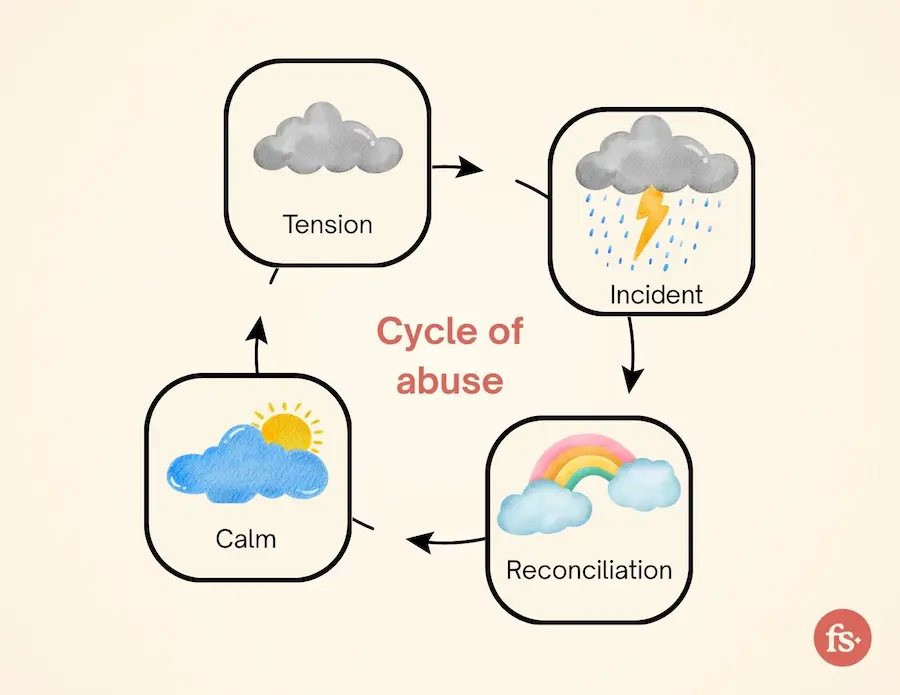
One reason people become stuck in this cycle is that the nervous system begins responding to its unpredictability. During abusive periods, stress hormones like cortisol keep the body on high alert. When the abuse temporarily stops and affection returns, the brain experiences a powerful sense of relief and reward. Because these moments of kindness are unpredictable, they can become especially compelling, similar to how the unpredictable rewards of a slot machine keep people coming back in hopes of another win.
Over time, this can contribute to what's known as a trauma bond, a strong emotional attachment between an abused person and their abuser. Combined with practical barriers like finances, children, or fear of retaliation, it can explain why leaving an emotionally abusive relationship is often far more difficult than it appears from the outside.
What are the effects of emotional abuse?
Studies suggest that the mental health impact of emotional abuse can be comparable to other forms of interpersonal violence, particularly when it is chronic or involves coercive control.
When someone is exposed to a threat, their nervous system activates its fight-or-flight response. This releases stress hormones like cortisol and adrenaline, increasing alertness, heart rate, and muscle tension so the body can respond quickly. Once the threat has passed, the nervous system typically returns to a baseline state of calm.
In emotionally abusive relationships, however, the threat is often ongoing rather than isolated. The unpredictability of criticism, manipulation, intimidation, or gaslighting can keep the nervous system in a prolonged state of alert, a process sometimes referred to as nervous system dysregulation. As a result, some people feel constantly on edge, anxious, or hypervigilant, while others begin to emotionally shut down, detach, or feel numb. Over time, this chronic stress response has been associated with sleep disruption, fatigue, headaches, digestive problems, muscle tension, and an increased risk of longer-term health concerns.
For some people, particularly those who have experienced prolonged or severe abuse, the experience can contribute to symptoms associated with post-traumatic stress, such as intrusive memories, hypervigilance, avoidance, or feeling emotionally disconnected from others.
How to leave an emotionally abusive relationship
Leaving an emotionally abusive partner can be difficult. This is especially true when you're married, have children together, rely on your partner financially, have limited social support. Some people also fear that leaving will make the abuse worse, and sometimes, abusive partners can escalate their behaviour when they feel they're losing control.
If you're considering leaving:
- Talk with someone you trust.
- Reach out to a therapist or domestic violence support service.
- Document concerning behaviours if it's safe to do so.
- Consider your financial and housing options.
- Develop a safety plan if you're concerned about retaliation.
- Avoid confronting an abusive partner if doing so may increase danger.
If there is any concern that emotional abuse could escalate into physical violence, prioritize your safety and seek immediate support.
How therapy can help
A therapist can help you identify abusive patterns more clearly. They won't tell you whether you should stay or leave a relationship, but they can help you reconnect with your own judgment and get clearer on what you want moving forward. Therapy can also help you process traumatic memories and complicated emotions like guilt, shame, grief, and anger, understand how the abuse has affected your nervous system and relationships, and develop healthier boundaries and more secure ways of relating to others. If needed, a therapist can also connect you with additional resources, such as domestic violence services, legal support, or community organizations.
Therapists often combine traditional talk therapy with body-focused approaches like somatic therapy or EMDR (Eye Movement Desensitization and Reprocessing). Rather than focusing only on talking through past experiences, these therapies address how trauma is stored in the body. Somatic therapy helps people become more aware of physical sensations associated with stress and trauma and develop skills to regulate their nervous system, while EMDR helps the brain process distressing memories so they become less emotionally overwhelming over time.
Healing is possible, but it rarely happens in a straight line. It's normal to have setbacks, moments of doubt, or periods where things feel harder before they begin to feel better. Just as importantly, the relationship you have with your therapist matters. Research consistently shows that therapeutic alliance, the sense of trust, safety, and collaboration between therapist and client, is one of the strongest predictors of successful therapy. Finding a therapist you genuinely feel comfortable with can make a huge difference.
Final thoughts
Emotional abuse can be difficult to recognize precisely because it often happens gradually and without visible injuries. Yet it can affect mental health, relationships, identity, and overall quality of life. Whether you're experiencing emotional abuse now or recovering from past experiences, support is available. Healing takes time, but with the right therapist, it is possible to rebuild confidence, strengthen your sense of self, and create healthier relationships.
Use First Session to find the right therapist for you.
Frequently Asked Questions

First Session Editorial Team
The First Session Editorial Team, composed of seasoned researchers, writers, editors, and therapists, focuses on providing content that helps Canadians find the right therapist.
