What Are the Bases in Dating? A Clear Guide to All 4 Bases
Most people hear the phrase "getting to first base" long before anyone explains what it means. The bases in dating are a way of describing how far two people have gone physically, using baseball as a stand-in for sex. The system is vague, and it can make physical closeness feel like a set of levels to clear. This guide explains what each base means, where the idea came from, and how to think about physical intimacy without treating it as a race.
Where did the bases metaphor come from?
The bases metaphor originated from American baseball. It was the most popular sport in the United States for most of the twentieth century, so its language spread into everyday speech. "Get to first base" started as a general phrase for making a first step toward any goal. People used it for job interviews, sales calls, and anything where you had to get started before you could succeed.
The sexual meaning came later, around the 1940s and 1950s. It gave people a way to talk about sex without saying anything explicit, which mattered at a time when sex was rarely discussed openly. One of the earliest known uses in print was in Norman Mailer's 1948 novel The Naked and the Dead, which mentioned "third base." By the 1950s and 1960s, American teenagers were using first, second, and third base to describe stages of physical contact, with "home" meaning sex.
What are the bases in dating?
- First base usually means kissing, including French kissing.
- Second base usually means touching above the waist, over or under clothing.
- Third base usually means touching below the waist, and often oral sex. It is treated as the step before intercourse.
- Fourth base, also called a home run, means sexual intercourse. In the original comparison this is "scoring," which is part of why the metaphor is worth questioning. It treats sex as a goal to win and the other person as an opponent to get past, rather than something two people share and both want.
At what point should you reach each base?
There is no universal rule about when you should reach each base, how long you should know your partner before engaging in any sexual activity, or that bases have to happen in any set order. The right pace is the one where both people actually feel ready. No one should feel rushed or pressured into anything.
If you are trying to decide whether to have sex, the Centre for Sexuality offers a simple tool called Head, Heart, Body that breaks the choice into three parts.
- Head is your values and knowledge. Why am I doing this? Does it fit with what I believe? Do I understand consent, birth control, and STIs? How will I feel about this decision tomorrow?
- Heart is your feelings. Do I trust and respect this person? Does this feel right to me, or am I doing it because I feel pressured by my partner, my friends, or what I see online?
- Body is what you physically notice. What does my body want to do? Is it excited, or nervous and scared? Do I like what is happening? Are both of us protected from STIs and pregnancy?
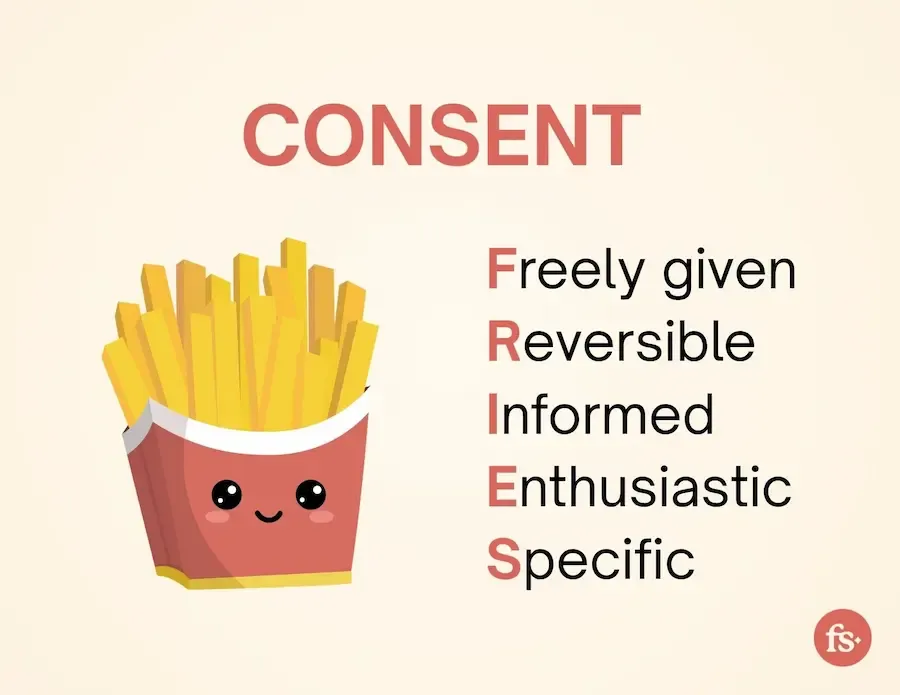
If you feel any doubt or discomfort, that usually means waiting, getting more information, or deciding this isn't right for you. Your partner has to reach their own yes too, so check in with them and get their consent. Planned Parenthood describes consent with the acronym FRIES: freely given, reversible, informed, enthusiastic, and specific. Freely given means no pressure. Reversible means anyone can change their mind at any point. Informed means everyone knows what they are agreeing to. Enthusiastic means a real yes, not a reluctant one. Specific means saying yes to one thing is not saying yes to everything. A yes earlier can still become a no, and that no should be respected without argument.
Are the dating bases still relevant today?
Not really. The bases metaphor doesn't align with many people’s experiences including same-sex couples, people who are asexual, and many couples who don't treat sex as a finish line. Modern dating generally avoids rigid, linear steps in favor of open communication, consent, and pacing that feels natural to the people involved.
The bases can still work as a quick, casual way to describe where things stand. The problem is using them as a rulebook. They can suggest that skipping a step is odd, that stopping is a failure, or that there is a right speed for everyone. There isn't. Current comprehensive sexuality education focuses on consent, communication, and healthy relationships rather than a fixed order, and links that approach to less shame and better long-term wellbeing.
Physical intimacy is only one piece of the puzzle
The bases only measure physical intimacy, but intimacy comes in several forms, and they all matter. Alongside the physical kind, therapists often talk about emotional intimacy (being open about how you feel), intellectual intimacy (sharing ideas and being taken seriously), experiential intimacy (doing things together and building a history), and spiritual intimacy (connecting over values or beliefs). A relationship tends to feel closest when several of these are present.
Emotional intimacy matters a lot. It is the sense that you can be honest about how you really feel and be met with care instead of judgment. Research on how couples grow close found that intimacy deepens when one person opens up and the other listens and responds with understanding. That exchange of sharing and being heard does more to build intimacy than any single physical act. A couple can have sex and still barely know each other, and two people can feel very close before they ever kiss.
Can therapy help with intimacy?
If sex or physical closeness brings up anxiety, therapy can be a good place to work through it. Some people carry shame from a past experience or an upbringing that treated sex as off-limits. Others freeze up around physical intimacy or find it hard to say what they want and where their limits are. A therapist can help you understand where those feelings come from and build the confidence to set boundaries and speak clearly.
Therapy works best when you trust the person you are talking to. Research consistently finds that the strength of the client-therapist relationship, called the therapeutic alliance, is one of the best predictors of whether therapy helps. That matters even more with a private subject like sex, where feeling judged can shut the conversation down.
The bases in dating are a piece of old slang, useful for a quick description and not much good as a plan. What each base means matters less than whether the closeness you are building, physical and emotional, feels safe, wanted, and mutual. There is no correct speed and no base you are supposed to have reached by a certain point. Your pace is yours to set. If the pressure around any of it feels heavy, talking with the right therapist can help you approach dating on your own terms.
Meet Your New Therapist
Jane Whitlaw
Registered Psychotherapist (Qualifying)
- Offers in-person (Surrey, BC)
- Virtual sessions in BC, MB, AB, SK, YT, NL, NT, NU
Jane Whitlaw
Registered Psychotherapist (Qualifying)
- She/Her
- Offers free consultation
- $170/session
- Somatic Therapy, Complex Trauma (CPTSD), Attachment, Abuse (Sexual/Physical/Verbal), Addiction, Intergenerational trauma, PTSD, Work-Life Balance, Understanding & Regulating Emotions, Stress, Separation and divorce, Relationships, Nervous system regulation, Navigating challenging relationships, Mindfulness and stress reduction, Mind-body connection, Life transitions, Family Conflict, Dissociation, Depression, Childhood trauma, Boundaries and boundary setting, Anxiety and Stress Management Skills, Career guidance, Equine-Partnered Psychotherapy

Richard Tatomir
Canadian Certified Counsellor
- Offers in-person (Langley, BC)
- Virtual sessions in all provinces and territories.
Richard Tatomir
Canadian Certified Counsellor
- He/Him
- Offers free consultation
- $200/session
- Supervising qualifying therapists, Complex Trauma (CPTSD), Psychedelic therapy, Neurodiversity, ADHD, Life transitions, End of Life Support, Cultural Challenges, Spirituality, Family Conflict, Abuse (Sexual/Physical/Verbal), Relationships, Behavioural Issues, Addiction, Anxiety and Stress Management Skills, Assertiveness, BIPOC, Befriending the Nervous System, Burnout, Caregiver burnout, Understanding & Regulating Emotions, Career Performance, Intergenerational trauma, College or University Coaching, Codependency
Marianne Campbell
Therapist in Training
- Offers in-person (Vancouver, BC)
- Virtual sessions in BC
Marianne Campbell
Therapist in Training
- Offers free consultation
- $115/session
- Neurodiversity, Relationships, Anxiety and Stress Management Skills, ADHD, Anxiety, Burnout, Couples Therapy, Emotional regulation, Learning disabilities, Negative thinking and ruminating, Nervous system regulation, Panic attacks, Somatic Therapy, Work-Life Balance, Boundaries and boundary setting, Anger Management, Attachment trauma, Building Self-Care Routines, Caregivers, Conflict resolution, Depression, General Mental Health, Mindfulness and stress reduction, Codependency, Overthinking, Attention-deficit/hyperactivity disorder (ADHD), Neurodivergent

Irina Carayannis
Registered Psychotherapist (Qualifying)
- Virtual sessions in ON
Irina Carayannis
Registered Psychotherapist (Qualifying)
- She/Her
- Offers free consultation
- $150/session
- Life transitions, Managing ADHD symptoms, ADHD, Overwhelm, Self-Regulation, Anxiety, Perfectionism, Identity and Self-Exploration, Boundaries and boundary setting, People pleasing, Low Self-Esteem and Self Worth, Emotional regulation, Relationships, Overthinking, Abuse (Sexual/Physical/Verbal), Addiction, Anger, Anxiety and Stress Management Skills, Assertiveness, Burnout, Caregiver burnout, Childhood trauma, Confidence, Depression, Disability, Early childhood, Eating disorders, Emotional Numbness, Empowerment, Financial Stress, Personal Growth, Perinatal, Neurodivergent, Attention-deficit/hyperactivity disorder (ADHD), Relationship Trauma
-(1).jpeg&w=3840&q=75)
Colin (Heron) Payne
Registered Therapeutic Counsellor
- Virtual sessions in AB, BC, MB, NL, NT, SK, YT
Colin (Heron) Payne
Registered Therapeutic Counsellor
- he/him/his
- Offers free consultation
- $140/session
- Complex Trauma (CPTSD), Anxiety, Mindfulness, ADHD, Anger, Attachment, Bullying, Chronic Illness, Climate Anxiety, Emotional regulation, Existential questions, Health anxiety, Imposter syndrome, Meaning and purpose, Men's issues, Nervous system regulation, Parenting, People pleasing, Perfectionism, Relationships, Self-Criticism, Self-esteem, Spirituality, Trauma, Neurodivergent

Jordan Wiener
Registered Psychotherapist (Qualifying)
- Virtual sessions in ON, BC, AB, MB, SK, YT, NT, NU, NL
Jordan Wiener
Registered Psychotherapist (Qualifying)
- Offers free consultation
- $160/session
- Stress, Emotional regulation, Relationships, ADHD, Anger Management, Anger, Couples Therapy, Depression, Workplace stress, Understanding & Regulating Emotions, Spirituality, Sleeping difficulties, Relationship anxiety, Psychedelic therapy, Parts Work, Performance anxiety, Mindfulness, Men's issues, Meaning and purpose, Masculinity, Life transitions, Insomnia, Existential questions, Burnout, Anxiety, Self Confidence
Amina Purac
Registered Psychotherapist (Qualifying)
- Virtual sessions in AB, BC, MB, ON, SK
Amina Purac
Registered Psychotherapist (Qualifying)
- She/Her
- Offers free consultation
- $135/session
- Abuse (Sexual/Physical/Verbal), Anger, ADHD, Anxiety, Behavioural Issues, Burnout, Career Stress, Confidence, Coping Skills, Cultural Challenges, Dating challenges, Depression coping skills, Emotional regulation, Family issues, Goal Setting, Life transitions, Low Self-Esteem and Self Worth, Men's issues, Mindfulness, Nature-Based Spirituality, Negative thinking and ruminating, Personality & Mood Disorders, Relationships, Self Destructive Behaviour, Stress
Cherrisse McWilliams
Registered Psychotherapist (Qualifying)
- Virtual sessions in all provinces and territories.
Cherrisse McWilliams
Registered Psychotherapist (Qualifying)
- She/her
- Offers free consultation
- $125/session
- Stress, General Mental Health, Life transitions, Work-Life Balance, Women's Health, Wellness Counselling, Trauma, Self-esteem, Relationships, Responsibility, Racism, Pregnancy, Postnatal Care, Perimenopause mental health support, People pleasing, Perfectionism, Parenting, Navigating challenging relationships, Motivation, Imposter syndrome, Health anxiety, College or University Coaching, BIPOC, Anxiety and Stress Management Skills, Self-Image
Nicolai Carp
Registered Clinical Counsellor
- Virtual sessions in BC, AB, MB, SK
Nicolai Carp
Registered Clinical Counsellor
- Offers free consultation
- $175/session
- Men's issues, Anxiety and Stress Management Skills, Anger Management, ADHD, Assertiveness, Body Dysmorphia, Childhood trauma, Coping Skills, Motivation, Relationships, Social anxiety, Workplace stress, Intergenerational trauma, Low mood, Low Self-Esteem and Self Worth, Masculinity, Mental performance, Mind-body connection, People pleasing, Personal Growth, Relationship to self and others, Relationship anxiety, Responsibility, Wellness Counselling, Sports Performance, Weight Management
.jpeg&w=3840&q=75)
Arooj Rehman
Registered Psychotherapist (Qualifying)
- Virtual sessions in ON, AB, BC, SK, MB, NL, NT, NU, YT
Arooj Rehman
Registered Psychotherapist (Qualifying)
- She/her
- Offers free consultation
- $160/session
- Anxiety and Stress Management Skills, Childhood trauma, Depression, Attachment, Attachment trauma, Attachment wounds, Behavioural Issues, Break-up recovery, Burnout, Coping Skills, Decision making, Familial and social relationships, Family issues, Goal Setting, Life transitions, Mental Decolonization, Negative thinking and ruminating, People pleasing, Relationship to self and others, Relationships, Self-Criticism, Stress, Trauma processing, Work-Life Balance, Vulnerability, Understanding & Regulating Emotions
-(1).jpeg&w=3840&q=75)
Olivia Johnson
Registered Psychotherapist
- Virtual sessions in ON
Olivia Johnson
Registered Psychotherapist
- She/Her
- Offers free consultation
- $165/session
- Trauma, Relationships, Borderline Personality Disorder, Self-Regulation, Personality & Mood Disorders, Panic attacks, Mindfulness and stress reduction, Anxiety and Stress Management Skills, Attachment trauma, Attachment wounds, Building Meaningful Connections, Coping Skills, Couples, Couples Therapy, Dissociation, Family Conflict, General Mental Health, Grief and Loss, Mind-body connection, Social anxiety

Jordan Wahlstrom
Counselling Therapist
- Offers in-person (Yorkton, SK)
- Virtual sessions in SK, MB
Jordan Wahlstrom
Counselling Therapist
- He/Him
- Offers free consultation
- $120/session
- Couples, Relationship to self and others, Parenting, Anxiety and Stress Management Skills, Attachment, Boundaries and boundary setting, Building Meaningful Connections, Christian counselling, Conflict resolution, Early childhood, Emotional regulation, Familial and social relationships, Family issues, Intimacy concerns, Men's issues, Navigating challenging relationships, Relationship anxiety, Relationships, Self-Regulation, Couples Therapy, Family Conflict, Work-Life Balance